Customer Asking for a Refund? What to Do Before It Becomes a Chargeback or a Lawyer's Letter
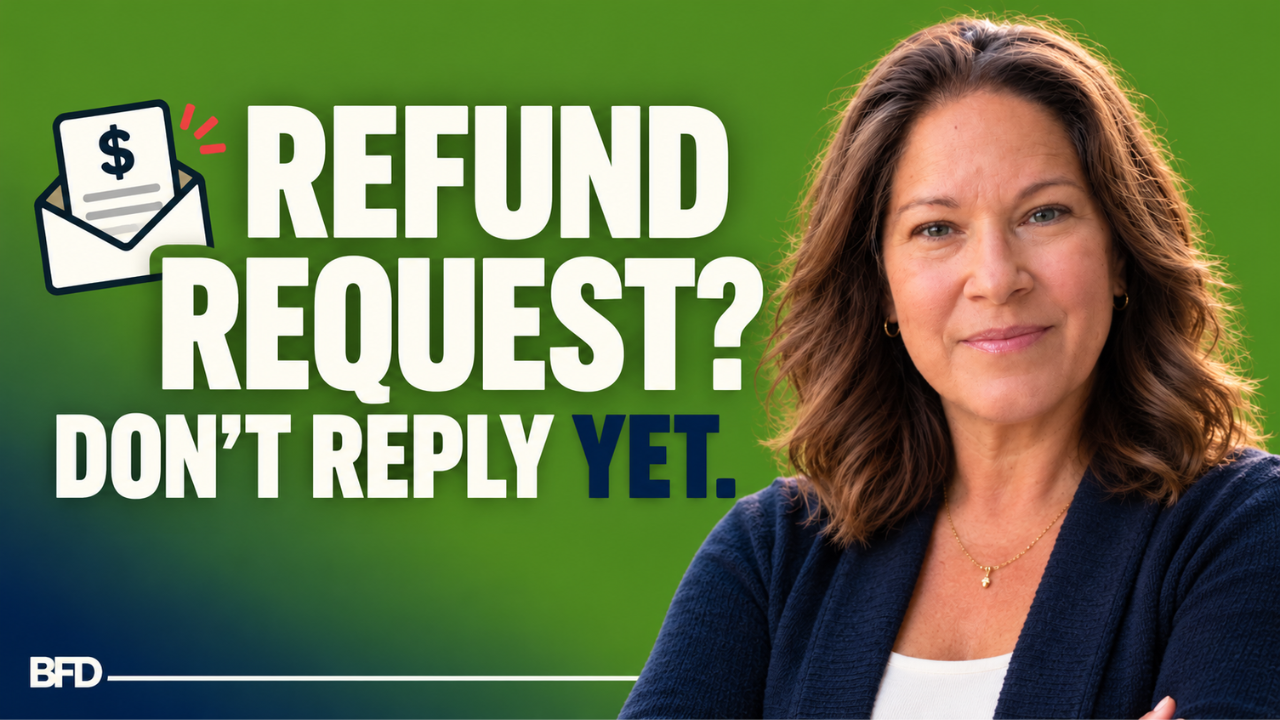
"I'd like a refund." Four words. Maybe polite. Maybe sent at 11 p.m. Maybe with the word "unfair" in it.
What you do next decides what this becomes: a closed email, a chargeback, or a letter from someone's attorney. Same request, three very different endings.
That's a Business Fire Drill, and the best time to run it is before the fire starts. Business moments are predictable. Panic is optional.
The Alarm
A refund request rarely announces itself the same way twice. It sounds like "I'd like a refund," polite, flat, or furious. Or "This isn't what I expected." Or "I never even got access." Or it arrives after your refund window closed.
And then there's the version where the tone changes: "unfair," "consumer protection," "my attorney."
It can land right after the purchase, when buyer's remorse is loudest. It can land halfway through delivery. It can even land after someone has used every bit of what you sold. Your response should be the same no matter when it shows up.
Reacting or Responding?
You have two instincts. Instinct one: refund them right now so the uncomfortable email goes away. Instinct two: say no immediately, without checking what your own policy says.
Both are reactions, and both end in the same place: a precedent you didn't mean to set, or a customer who feels brushed off and now has other places to go. Their bank. A review site. Social media. A lawyer.
Responding is a little slower. It starts with two questions before you type a word: What did they agree to when they bought? And what did they actually receive?
If you caught Episode 1, you know a chargeback goes around you. A refund request comes to you. That's your chance, so let's use it well.
Running the DRILL
D — Don't react. No instant refund. No defensive reply. Close the email and go make a cup of coffee.
R — Record everything. Pull three things: the purchase terms they agreed to at the time they bought (not the version you have today), your delivery and access records so you can see what they received and when, and the full message thread, including DMs and screenshots.
I — Identify the real risk. Is this an ordinary "I'm outside the window" conversation, or does it carry bigger signals: a chargeback threat, a mention of a public review, legal-sounding language? If it's the second kind, get your own attorney's eyes on it before you reply again.
L — Lead with calm. Respond once. Point to the policy they actually agreed to, not a fresh explanation you made up in the moment. A calm, consistent answer rarely escalates. A defensive or inconsistent one almost always does.
L — Lock in the lesson. When it's over, ask: does my policy clearly cover this exact situation? Would my records hold up if I had to point to them again? And one rule: never change or backdate your terms after the fact to look cleaner. That makes it so much worse.
The Fire Extinguisher
Build this before the fire happens.
- Refund and cancellation terms inside your real purchase terms. Not a verbal understanding, and not a line buried in an email. If yours need work, that's what the Purchase Terms Generator is for.
- A one-page refund response protocol, so anyone on your team answers the same way every time.
- Delivery records you can pull up in a minute, so you can see exactly what has transacted between you and the buyer.
- One person who owns refund requests, so the answer doesn't depend on who saw the email first.
That last one matters even more as we bring AI employees onto Team Tech. What you train it on, how you train it, and who trains it can all produce inconsistent answers about your refund policy. AI employees work fast, and they will scale your mess or scale your success. Be deliberate about which.
If the fire is already going, pull the terms they agreed to, pull your records, and respond once.
Your Next Right Decision
You have three options, and all of them are valid.
Option 1: Do nothing. Your purchase terms spell out refunds clearly, you keep clean delivery records, and everyone, Team Human and Team Tech, answers the same way each and every time. You're good.
Option 2: Put the drill in place. If you're not sure your terms cover refunds clearly, or the answer changes depending on who replies, start there this week.
Option 3: Send this to a dear friend who needs it now. You know the one who sells something online and says, "I just refund everyone, it's easier."
Your free homework: find the refund wording on your checkout page and read it out loud. If you can't tell what it says, neither can your customer.
Most refund requests aren't a legal problem. They become one when there's no clear policy to point to and no record of what was delivered.
Business moments are predictable. Panic is optional. Run the full drill inside Business Fire Drills, Drill 05: Before a Refund Request Turns Into a Bigger Problem.
👉 tamsenhorton.com/business-fire-drills
Keep Exploring: More on Refunds, Chargebacks and Purchase Terms
- I Could Have Told You This Email Was Coming — Episode 1, the chargeback that goes around you
- Kajabi mini-course creators - what is your refund policy? — decide your refund policy before someone asks for one
- The Terms and Conditions for Your Online Courses, Memberships, 1:1 Services — the basics of purchase terms for what you sell
- Define Lifetime Access for your Kajabi Products, Courses, and Membership Sites — the access wording that starts a lot of refund fights
- Your High-Ticket Offer Isn't Being Delivered — Episode 5, when the agreement goes sideways from either seat
Listen to the Business Fire Drills Podcast
Every business decision is impacted by legal — and we want those impacts to be positive.
If you’re building, creating, or using AI in your business, get my latest briefings directly in your inbox.
I’ll help you stay clear, compliant, and calm.
I send thoughtful updates — never spam. You can unsubscribe anytime. Emails are for education, not individual legal advice, and help you stay clear on the business impacts of law and your choices.