Someone Copied Your Content? Why You Can't Stop It and What to Protect Instead
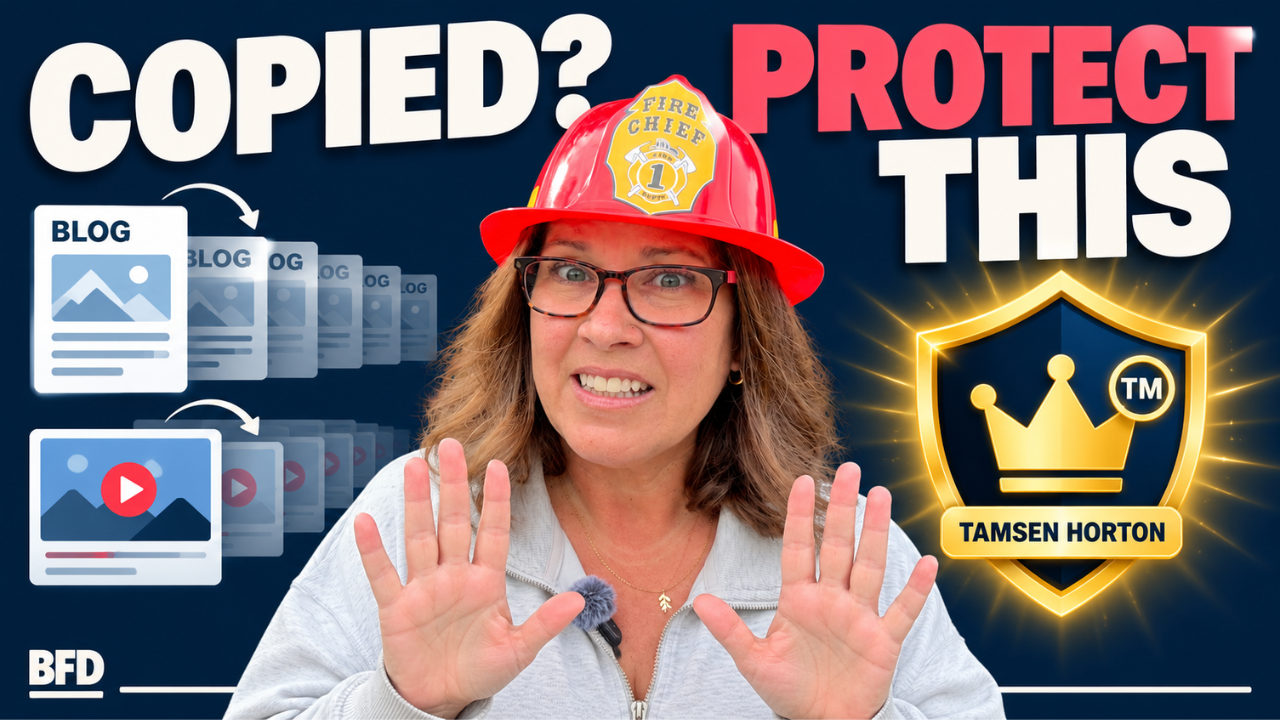
Let me say the uncomfortable part first: someone is going to copy your content. In 2011, that meant a lazy blogger lifting your article. Today, with AI, anyone can grab anything and recreate it in seconds, likely on a scale you can't begin to chase. And you will not claw it back.
So this drill isn't "what do I do after someone copies me?" It starts further upstream. What do I own that matters, that can actually be protected, and that I'm willing to spend the time, money, and energy to defend? If I can't recover it, why am I protecting it? That is bailing water out of a boat that is sinking.
Here's the mindset shift. For most online business owners, content is not king or queen anymore. Your blog post, your carousel, and your video can all be recreated. What's valuable is your name, your recognition, how you do what you do, and the frameworks you're known for. I've always named my frameworks and built around them, knowing I can't stop everyone, and not wanting to spend my life trying.
The quick version
- The alarm: a nearly identical post or sequence shows up on someone else's account, with no credit.
- Reacting: a public rant before you've verified anything, or treating every similar idea as theft.
- Responding: knowing the difference between an idea and its expression, keeping dated originals, and deciding ahead of time what you'd fight for.
- Copyright protects the specific way you express something, not the idea, the method, or the name of your framework. In the U.S., you generally need to register a work before you can sue over it, and registering before the copying happens matters for damages.
- Trademark protects your brand: name, logo, slogan. It's usually the easiest and most valuable asset to protect. Search first, then register.
- Patents protect new, useful inventions. Most online business owners don't need one, and AI is changing the rules, so talk to a patent attorney early if you think you do.
- AI: work created purely by AI generally can't be protected by copyright in the U.S. Human authorship matters, so how you and your team use AI changes what you own.
- The Fire Extinguisher: name your crown jewels, keep dated originals, register copyright for the few works that are real assets, search and protect your brand name, and use contracts that make ownership clear (including for AI-assisted work).
Your free homework
Write down the one or two assets in your business you would truly fight for. Those are your crown jewels. Then take the energy you'd spend chasing copycats and build something stronger, safer, and more enjoyable.
Not sure which parts of your business are exposed? Run the Smoke Detector: 11 questions, about three minutes, and it shows you which fires your business is most likely to have. Go use the Smoke Detector.
Keep Exploring
- Is Your Business Really Backed Up? A Backup Plan for Your Data and Your People
- Software Shutting Down? How to Protect Your Business Before a Platform Disappears
- All the Business Fire Drills
Listen on your favorite podcast app: Business Fire Drills podcast (also on Apple Podcasts and Spotify).
Business moments are predictable. Panic is optional. This is general educational information, not legal advice for your situation. Intellectual property law varies; talk to an attorney about your specific situation.
Every business decision is impacted by legal — and we want those impacts to be positive.
If you’re building, creating, or using AI in your business, get my latest briefings directly in your inbox.
I’ll help you stay clear, compliant, and calm.
I send thoughtful updates — never spam. You can unsubscribe anytime. Emails are for education, not individual legal advice, and help you stay clear on the business impacts of law and your choices.
