Software Shutting Down? How to Protect Your Business Before a Platform Disappears
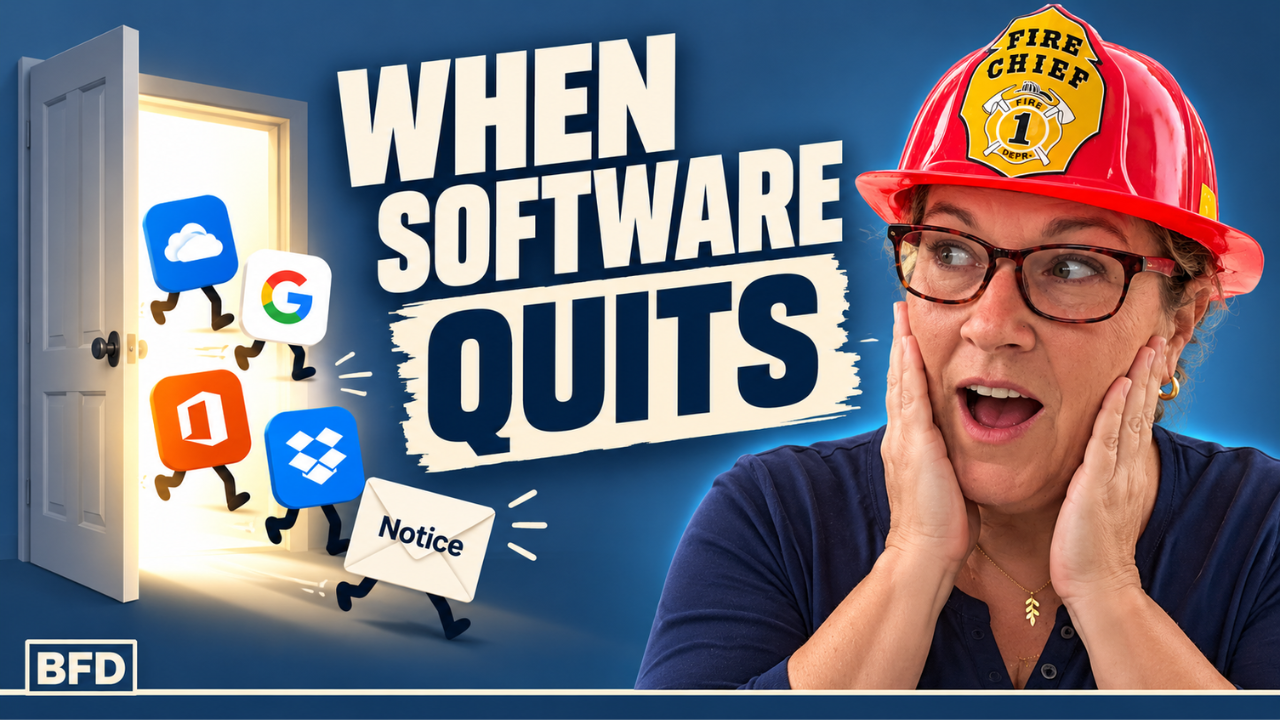
Picture this. You open your email on a Tuesday and it says, "After careful consideration, we're sunsetting our service. Your account will close in 30 days." Maybe it's the scheduling tool your whole booking process runs on. The free app connecting your checkout to your email list. The platform that holds your client recordings. Or a bigger company bought your favorite little tool and quietly decided it wasn't worth keeping.
Here's what very few people say out loud: every tool your business runs on is a business too. Any business can shut down, get acquired, change its pricing overnight, or pivot away from what you needed. I think of my tools as employees, my "team tech," and just like in the human world, we should expect employees to move on. The risk gets built in long before the notice arrives, the day you started using the tool and never asked, "What happens if this disappears?"
The good news is that this is a very predictable business moment. A platform shutdown can be an inconvenience instead of a crisis if you decide ahead of time what is truly mission critical, keep your own copy of it, and know what you would do if the notice landed tomorrow.
The quick version
- The alarm: a shutdown email, sometimes with months of notice, sometimes almost none, or a cheap tool that gets priced out of reach.
- Reacting: ignoring the notice, missing the deadline, then panic-migrating everything in a weekend.
- Responding: critical data already backed up on your own terms, the real deadline on your calendar, and a calm plan.
- The Fire Extinguisher: regular exports of mission-critical data, knowing which tools are irreplaceable versus convenient, reading every notice, no single point of failure, and a running list of alternatives.
- Already burning: read the full notice, export in the most portable format, migrate what makes you money first, and tell customers early if they will notice.
Your free homework
List the tools your business can't run without. Next to each one, write the last time you exported your mission-critical data from it. If the answer is "never," that's where you start. For many businesses, the first export is the email list.
Not sure which of your tools is a single point of failure? Run the Smoke Detector: 11 questions, about three minutes, and it shows you which fires your business is most likely to have. Go use the Smoke Detector.
Keep Exploring
- Contractor Still Have Your Passwords? How to Offboard a Team Member Safely
- Social Media Account Disabled? How to Protect Your Business Before You're Locked Out
- All the Business Fire Drills
Listen on your favorite podcast app: Business Fire Drills podcast (also on Apple Podcasts and Spotify).
Business moments are predictable. Panic is optional. This is general educational information, not legal advice for your situation.
Every business decision is impacted by legal — and we want those impacts to be positive.
If you’re building, creating, or using AI in your business, get my latest briefings directly in your inbox.
I’ll help you stay clear, compliant, and calm.
I send thoughtful updates — never spam. You can unsubscribe anytime. Emails are for education, not individual legal advice, and help you stay clear on the business impacts of law and your choices.